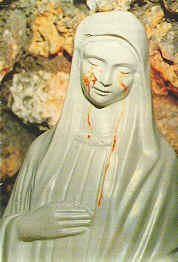
 Like almost everything in life has an explanation, I wanted to tell the scientific explanation is the fact that they have seen many cases in the world, when the tables and now finally some pictures plaster cry.
 Well, leaving sides some blatant cheating people human blood added to these images, for which could have some trials, but not the issue. In some cases, red liquid, which appears to be blood, but it is not so, and here I want to stop, this fluid is a pigment produced by a particular bacteria called Serratia marcescens , Serratia bacteria also rubidea , reported the production of pigment. Speaking
pigment, these different chemicals derived carotenoids, such as pyrroles and other prodigiosita.
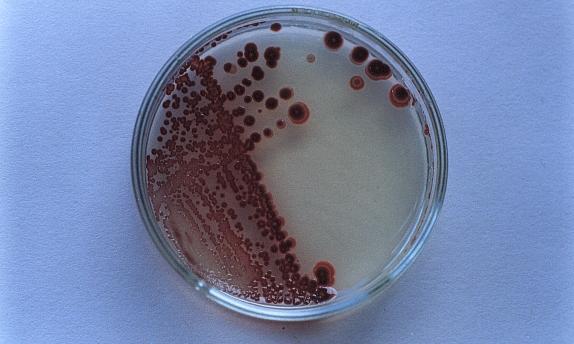 The genus Serratia , is an opportunist who has been recognized as a human pathogen only from the 60's. Before, with the assumption that the organism was not pathogenic, the red pigment found in some strains of microorganisms became attractive as markers to study some important issues involving bacterial transmission.
The epidemiology of Serratia is something different from other Enterobacteriaceae (enterobacteric, bacteria are so called by that infect the gastrointestinal tract), as it seems less likely to Serratia colonize the gastrointestinal tract , but is more likely to colonize the respiratory and urinary hospitalized adults. Among hospital-acquired infections have been found Serratia produces about 4% of bacteremias and lower respiratory tract infections and 2% of urinary tract infections, surgical wounds and skin infections. Besides the importance as opportunistic hospital specifically has been associated with infections in heroin addicts. In a study in the 70's, it was reported that Serratia was isolated in 14% of endocarditis associated with drug addicts in San Francisco. Most cases of hospital acquired associated with intravenous catheters, urinary catheters and intraperitoneal or the instrumentation of the urinary and respiratory tracts.
antibiotic treatment of infections with Serratia is complicated by the high frequency of multiple antibiotic resistance observed in these bacteria.
Well, the thing is, old buildings where the birds came, the fecal pigeon, fell into the ceiling, then walls, well the birds and their fecal contain many (might be surprised by the many) parasites and bacteria. Then some of them had this bacteria, then over several factors, including some exposure to light, moisture, nutrients, bacteria grew and began producing the characteristic red pigment, this pigment does not dissolve, so to collect a certain amount, contact the wall dyed, having a picture on the other hand, saw clearly what people was that the painting, the paintings was crying, in some cases, these paintings were religious motifs which gave a whole connotation with miracles and faith, the case of plaster images, is very similar, these images were mostly empty, the bacteria came in contact (which are mobile) and then looking for where "out" to remove the pigment.
know, an explanation scientific understanding of how people sometimes see "mourn blood."


0 comments:
Post a Comment