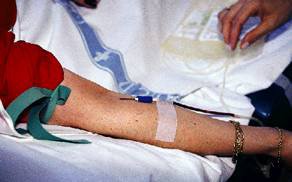
all know that to cure or improve cancer have 3 options:
- Surgery
-
Chemotherapy - Radiotherapy
Surgery is recommended in cases of cancer in situ (ie, not broken basement membrane tissue), but usually then supplemented with radiation or chemotherapy to eliminate cancer cells that may have escaped surgery.
Chemotherapy is injected into the body inhibitors of nucleotide synthesis (Usually), to inhibit DNA synthesis in cells replicate faster in this case the neoplastic cells (cancer). Radiotherapy occupies the same principle, but applying ionizing radiation causes DNA damage of tumor cells, and so ihnibir transcription and replication.
All this would be optimal if they had so many side effects. Chemotherapy with radiation therapy in general cause leucopenia (low white blood cells), anemia, vomiting, etc. In short, do not know if the cure is worse than the disease.
have therefore been sought different ways to fight cancer either in situ or with metastases. This is the promise of radioimmunotherapy.
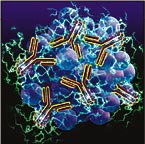
Broadly speaking, radioimmunotherapy is a merger between radiotherapy and immunotherapy. It involves injecting monoclonal antibodies (MAB, Monoclonal Antibodies of ) labeled with a radioactive compound (as the Y 90 or I 131), which kill cancer cells for several targets.
in radioimmunotherapy Research has focused primarily on the treatment of NHL B cells (NHL, of non-Hodgkin's limphomas ). These lymphomas have an overexpression of CD20 molecule the cell membrane molecule expressed on developing B cells normally. Studies suggest that this molecule would induce apoptosis (programmed cell typical samples) in B lymphocytes, so that treatment with radioactive MAB against this cancer in particular, have the following effects:
- Death by induction of apoptosis of cancer cells NHL activation molecule CD20.
- Death by DNA damage produced by radiation brings the MAB.
- Death by phagocytosis, and antibodies to remember that our body normally opsonize to pathogens for subsequent phagocytosis by macrophages (to explain it to macrophages bacteria like cream, not without cream, "cream" are antibodies.
- Death by ADCC (antibody-dependent cytotoxicity). This is because in our immune systems have cells called NK cells (natural killer , natural killer) that they possess a membrane receptor antibodies. When contacted with an antibody, release substances into the cell opsonized with antibodies, which induce apoptosis.
As shown, radioimmunotherapy promises to be a complete weapon cancer treatment. Here I tried to give an overview about it.